How to Mark Uncertain Cards in a Rummy Study Journal

A study journal is most useful when it records uncertainty instead of hiding it. Players often remember a hand as if their original plan had been obvious, especially after seeing the final melds. Marking uncertainty during review helps you distinguish a clear error from a reasonable choice with incomplete information. It also creates better questions for future practice.
Use three symbols or short labels. Write “C” for a connection you can explain, “P” for a possibility that needs a specific card, and “U” for an assumption about another player. For example, a same-suit six and seven might receive C if they already form a useful group, while a lone eight waiting for a nine receives P. A guess that an opponent is collecting a suit receives U. The labels need to be quick enough that they do not interrupt play.
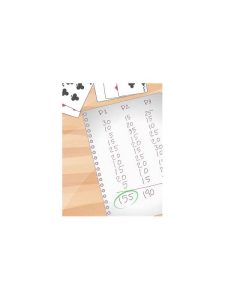
At the end of a hand, copy only the important cards into your journal. Record the card, its label, and the action you took. Add one sentence explaining what would have changed the label. Perhaps a visible discard would have made a possibility weaker, or a new draw would have turned an assumption into evidence. This turns notation into a learning loop rather than a decorative list.
Review entries after several sessions, not immediately after every disappointment. Count how often a “P” became a useful group and how often it consumed space without progress. Also count “U” entries that were treated as facts. These numbers do not predict future cards, but they can reveal habits: perhaps you overvalue speculative runs or read too much into an opponent’s single discard.
Keep the journal private and concise. Do not record account details, payment information, or personal data alongside game notes. The goal is to improve observation and decision language. Over time, your labels can become more precise, such as “P-one-card” or “U-weak-signal,” but avoid building a system so complicated that you stop using it. Honest, repeatable notes beat perfect notes that never get written.
If you review with another player, agree that the labels describe the strength of evidence, not the intelligence of the person who made the move. Ask them to identify which fact would upgrade or downgrade a label. This keeps the conversation practical. Different players can reasonably assign different confidence levels to the same position, and discussing that difference is often more valuable than trying to force a single answer.