
Rummy FAQ: Can Two Sequences Share One Card?
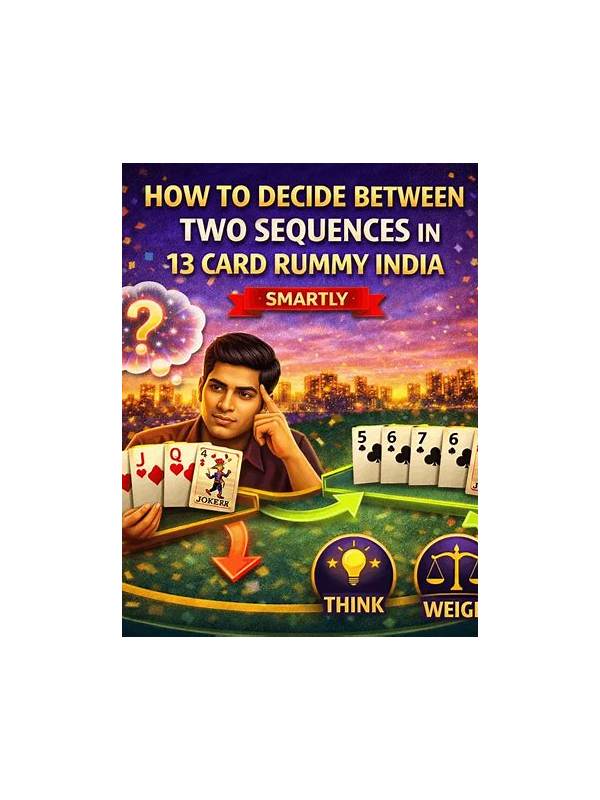
A common source of confusion is seeing one card that appears to connect two sequences. For example, a middle rank may sit between neighboring cards in two different suit patterns. The visual overlap can make a hand look more complete than it really is.
In most rummy formats, each physical card is assigned to one meld when you declare. It cannot be counted twice. If two proposed sequences both require the same card, you must choose which route receives it and then check whether the remaining cards still form legal groups. The exact rules can vary, so read the format’s declaration requirements before playing.
Use a simple test. Circle each proposed meld and mark every card used. If a card receives two marks, the plans overlap. Remove it from one meld and inspect the leftover cards. Sometimes the second route remains valid without that card; often it does not. This quick test prevents a last-second declaration error.
Overlapping routes are not useless. They can show flexibility while the hand develops. A shared card may support different possibilities until another card arrives. The mistake is treating both possibilities as completed structures at once. Mark the card as contested and seek a replacement for one route.
Jokers need separate attention. A wild card may substitute for a missing position under the rules, but it still occupies one position in one meld. It does not give you an extra physical card. If a joker is doing important work, verify that any pure-sequence requirement is still satisfied without it.
Before declaring, lay out the hand as a final partition: every card should belong to one valid meld or be identified as permitted leftover material. Check the required number of sequences, any pure-sequence rule, and the treatment of jokers. A hand that looks connected is not necessarily a legal hand. Clear allocation is more reliable than visual symmetry.


