Rummy Comparison: Card Roles Versus Card Locations

Cards can be organized by location or by role. Location sorting places them in a sequence, set, or loose-card row. Role sorting asks what each card is doing: anchor, connector, completed-group member, flexible backup, or discard candidate. Location sorting is quick and familiar, while role sorting can expose why a tidy hand is still strategically unclear.
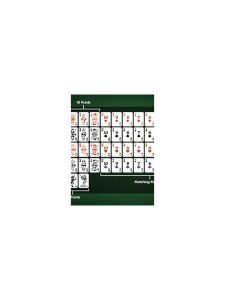
Location sorting is useful when checking legality. It lets you see whether ranks are consecutive, whether suits match a sequence, and whether a set contains the required variety. It also reduces the chance of overlooking a complete group. However, a card’s position can make a weak idea look established. Three cards placed together may be only a speculative fragment.
Role sorting adds a second layer. An anchor is a card around which a reliable group can be built. A connector links neighboring ranks or plans. A completed-group member no longer needs the same flexibility as a loose card. A discard candidate has no strong current job or has an expensive replacement requirement. These labels are temporary and should change as the hand changes.
The two methods work best together. Start with location sorting to create a factual map. Then annotate the roles without moving every card. Ask whether each partial group has an anchor, whether each flexible card has more than one use, and whether a completed group is being disturbed without evidence. If the role is unclear, place the card in a neutral area rather than assigning it a confident label.
Compare a proposed discard by role, not appearance. A card at the edge of a sequence may be an important connector, while a card in a pair may be the least useful member if the pair has no realistic extension. Likewise, a card outside all groups may still be a valuable backup. The role view explains these exceptions better than a simple left-to-right scan.
Use role sorting during review to identify repeated errors. If you often misclassify connectors as loose cards, add a connector check. If you keep too many flexible cards and never commit, add a deadline. The goal is not to maintain a perfect taxonomy. It is to make the reason for each hold or discard visible enough to test.
Clear roles make later reviews faster and less dependent on memory.
The role of a card is always provisional. A connector can become a completed-group member, and a backup can become the primary route after one draw. Reclassify when the evidence changes rather than defending the old label. This flexible vocabulary keeps the layout informative without pretending that the hand is fixed.