Rummy Discard Signals: Read Information Without Giving Too Much Away
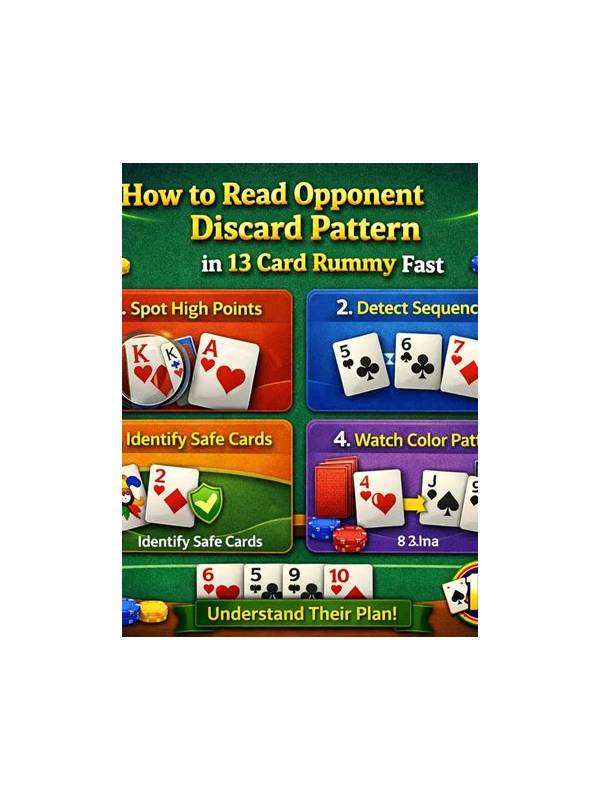
Every rummy discard carries two kinds of information. It changes the visible pool of cards, and it may reveal what a player does not currently want. Neither signal is perfect, but both can improve your decisions when read cautiously. The goal is to notice patterns without turning one discard into a complete story.
Start with your own needs. Before interpreting another player’s move, know which cards are useful to your structure and which are expensive liabilities. If you are holding a card that completes your group, its value comes from your hand even if the opponent’s discard appears interesting. Avoid changing plans simply because the pile offers a tempting card.
Then watch repeated choices. One discarded card may be random or forced. Several cards from a connected rank range or suit can suggest that a player is not building there, but it does not prove their entire hand. Use repeated signals to rank your options: a route supported by several visible clues may deserve less priority than a flexible route with fewer assumptions.
Think about what your discard communicates too. A card that obviously completes a common sequence may be valuable to someone else. If you must release it, compare the risk with safer alternatives and the rules of the format. Do not hold every useful-looking card forever; excessive secrecy can leave you with high-value cards and no legal finish.
Avoid tracking more detail than you can use. Remember the last few relevant cards, especially those connected to your plans, and let the rest go. A complicated mental inventory can distract you from your own hand. If you take notes in a permitted practice setting, record patterns after the hand rather than during a fast turn.
Discard reading is an aid, not a guarantee. Players can change plans, draw from hidden cards, or make mistakes. Combine the evidence with your hand’s legality, the scoring risk, and the time available. The strongest choice is usually the one that remains reasonable even if your interpretation of the opponent is wrong. Every rummy discard carries two kinds of information. It changes the visible pool of cards, and it may reveal what a player does not currently want. Neither signal is perfect, but both can improve your decisions when read cautiously. The goal is to notice patterns without turning one discard into a complete story.
Use repeated signals to update a plan, not to invent certainty.