Rummy Guide: Read Opponent Discards Carefully
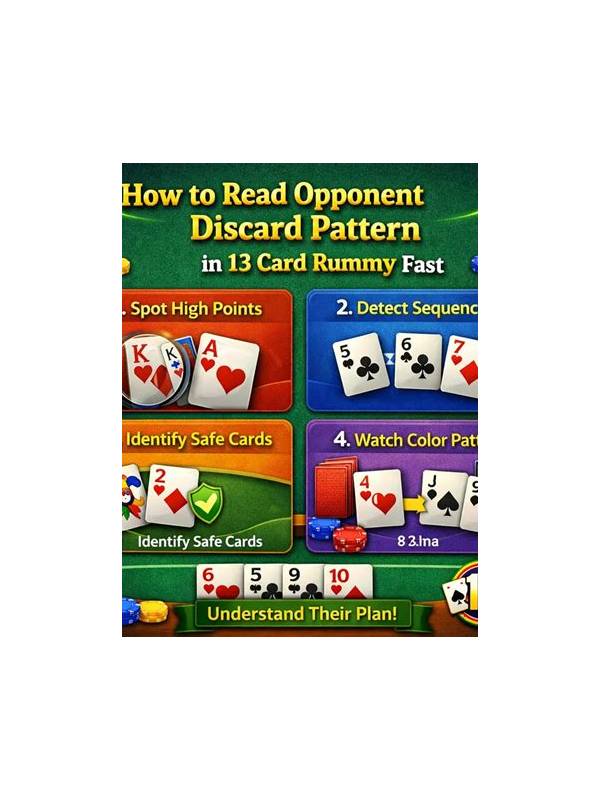
Opponent discards provide information, but they do not provide a full hand description. A card may be discarded because it was useless, because the player changed plans, or because it was a deliberate signal. The safest approach is to treat every discard as a clue with limited confidence.
Begin with repetition. One discarded card says little. Several cards from the same suit or around the same rank may reveal a broader pattern. Even then, consider timing. An early discard often reflects a starting hand decision, while a late discard may reflect pressure, a completed group, or a need to reduce points.
Next, separate what you know from what you infer. You know that a visible card left the hand. You may infer that related cards are less useful to that player, but you cannot know whether the player holds another copy or is setting a trap. Keeping this distinction clear prevents you from refusing every card near an opponent’s discard.
Use the information to choose between equal options, not to replace your own hand plan. If a discard suggests that one suit is being ignored by an opponent, it may slightly improve the value of that suit for you. But a weak card does not become good merely because another player discarded nearby cards. Your legal structures and point risk remain primary.
Watch the discard pile as a sequence, not as a collection of dramatic moments. A player who throws low cards early and high cards later may be changing from exploration to damage control. A player who repeatedly takes from the open pile is revealing a preference, though the reason may still be unclear. Record patterns briefly and update them when new evidence arrives.
Good table reading is disciplined uncertainty. It helps you avoid giving away useful cards blindly, but it should never become a story you defend after the facts change. When the hand ends, compare your inference with the revealed arrangement. Keep the observations that predicted behavior and discard the theories that only sounded clever.
Avoid watching one opponent so intensely that your own turn suffers. A short glance at the pile is enough to notice repeated suits, ranks, and changes in tempo. If the signal is ambiguous, choose the discard that keeps your own hand sound and record the clue for later. Public information is incomplete by definition, so use clues to improve a close decision rather than pretending they remove uncertainty.