Rummy Comparison: Early Melds Versus Delayed Melds
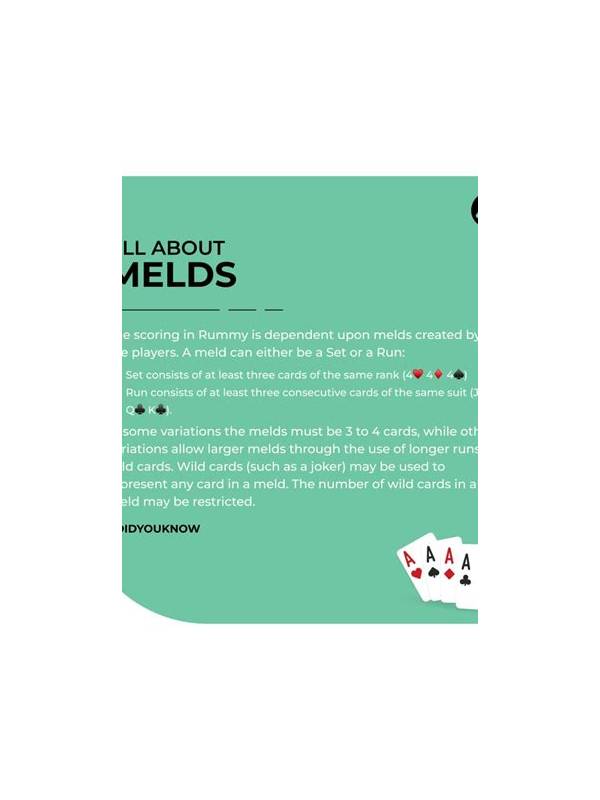
Showing or locking in a meld early can make the hand easier to read, but delaying a meld can preserve uncertainty and flexibility. Neither approach is automatically superior. The right choice depends on the quality of the group, your remaining cards, and the rules of the table.
An early meld is attractive when the group is strong and unlikely to be needed for another route. A clear pure sequence, for example, can reduce the risk of forgetting a required structure. Early organization also lowers mental load: once a group is confirmed, you can evaluate the remaining cards more calmly. If the meld contains valuable cards, removing them from your loose-card calculation may reduce penalty exposure.
The cost is information and flexibility. Once cards are committed, they may no longer help connect with another group. You may also make your general direction easier for opponents to infer, depending on the game interface and rules. A weak meld can be especially expensive if it uses a card that could bridge two stronger plans.
Delayed melding keeps more options alive. It is useful when a group can be rearranged, when a missing card could support two routes, or when you need another draw before deciding. Delay also gives you time to compare the group with new information from the discard pile. Yet delay is not free. A hand full of unconfirmed cards can hide a missing pure sequence, and carrying high-value cards while waiting creates avoidable risk.
Use a three-part test. First, is the group already legal and structurally useful? Second, would delaying it preserve a real alternative or only an attractive fantasy? Third, what happens if the next two draws fail to help? If the group remains valuable under that failure scenario, early formation is often sensible. If the group is a bridge to several plans, a short delay may be justified.
Review the decision after the hand, not just the result. An early meld that lost may still have been correct, and a delayed meld that happened to win may have been reckless. Judge whether the choice used the information and flexibility available at the time. That comparison builds a more reliable habit than copying the timing of a single successful hand.
You can also use a hybrid approach. Confirm the group mentally, keep it organized, but delay an irreversible commitment for one turn when a meaningful alternative remains. This preserves clarity without demanding that every card be locked immediately. The important point is to define what information you are waiting for and when you will stop waiting.