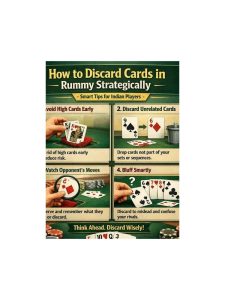
Rummy Comparison: Visible Discards Versus Hidden Draws
Choosing between a visible discard and a hidden draw has two dimensions: card quality and information. The visible card is known, so it can complete a plan immediately. The hidden draw preserves uncertainty for everyone, but it may produce a card that does not fit your structure.
Take the visible discard when it creates a credible improvement and the information it reveals is acceptable. Picking a card can signal that its rank or suit matters to you. That signal is not always harmful, especially when the card completes a strong group, but it should be part of the decision. Ask whether an opponent can use your likely preference against you.
Choose the hidden draw when the discard is only superficially useful, when taking it would expose a fragile plan, or when your hand needs a wider range of possibilities. A hidden draw is not automatically safer. It can encourage wishful thinking because you imagine the best unseen card rather than the full range of outcomes.
Timing changes the balance. Early in a round, a known card may be worth taking because it gives your hand structure. Later, a hidden draw may be preferable if the visible option creates a clear signal and does not materially lower your deadwood. The reverse can also be true when a known card completes an urgent requirement.
After each choice, note both effects: “What did I gain?” and “What did I tell the table?” This habit keeps information management connected to hand management. No choice removes uncertainty, but a deliberate comparison helps you spend that uncertainty wisely.
Remember that the table’s information value can change without any card being useful to you. A player taking a visible card may clarify one part of their plan, while a sequence of closed draws may tell you almost nothing. Keep your interpretation proportional to the evidence. Avoid announcing your own preferences through unnecessary pickups, but do not reject a strong known improvement merely because it is visible. Practical hand value remains the first filter. Practical hand value remains the first filter.
When the two options are close, use a simple tie-breaker: choose the source that leaves more credible next actions and fewer high-cost leftovers. If the visible discard is only marginally better but gives away a clear preference, a hidden draw may preserve flexibility. If it completes a strong group, the signal may be a fair price. The comparison should be deliberate, quick, and revisited when the round changes.