Rummy Guide: Read a Nearly Empty Discard Pile
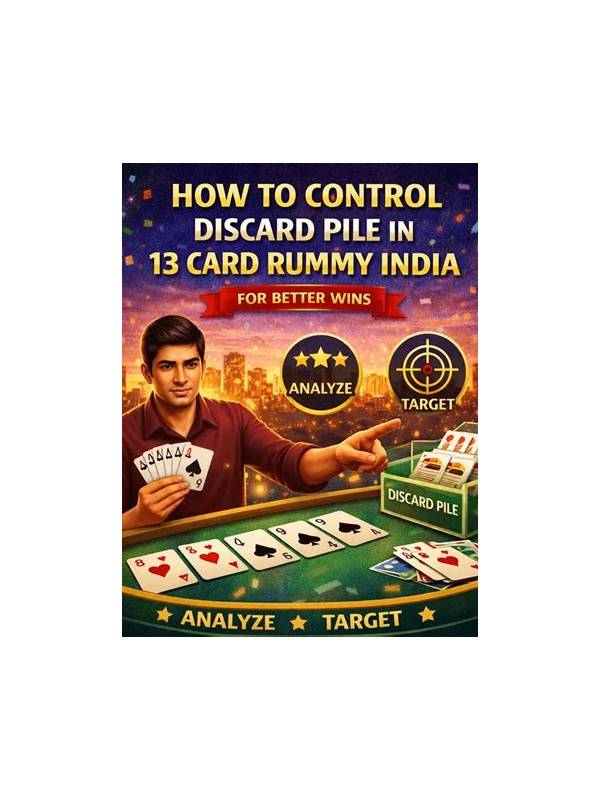
Early in a rummy hand, the discard pile may contain only a few cards. Players sometimes treat this lack of information as a signal that a particular card is likely to appear. It is more accurate to treat the pile as a small sample with limited evidence.
Begin by recording what the visible cards actually show. A missing rank is not proof that the rank remains available, and a single discarded suit does not reveal a player’s complete direction. Note only concrete observations: which cards are visible, which routes they improve, and whether taking one would expose your own plan.
When the pile is short, compare the top discard with the closed draw using immediate value and future information. If the top card completes a required structure or creates a strong route with little cost, it may be worth taking. If it merely looks interesting, the closed draw may preserve flexibility. The absence of useful visible cards is not itself a reason to force a draw from the pile.
Keep your own discards neutral when possible. An early discard can still tell observant players something about your hand, but a card that has no clear connection to your strongest route gives less information than a dramatic release from a nearly complete group. This is not about hiding every plan; it is about avoiding unnecessary signals when the hand is still forming.
As more cards appear, update the evidence without rewriting history. A new discard may make one route more plausible, but it does not retroactively prove that your earlier choice was wrong. Use a fixed review point after each draw: what is confirmed, what is still uncertain, and which card has the weakest job now?
The nearly empty pile is therefore a reminder to stay modest about prediction. Use visible information as one input among structure, replacement cost, and fallback value. When the sample is small, a disciplined process usually outperforms a confident story about what another player must be holding.
One useful note is the confidence level of each observation. Mark a fact as visible, an inference as plausible, and a prediction as uncertain. This vocabulary keeps a small pile from carrying more weight than it deserves. It also makes post-game review cleaner: you can see whether the mistake came from missing information or from treating a weak inference as a fact. Keep that distinction visible when deciding whether to take a discard, because a small sample should influence caution rather than create certainty.