Rummy Guide: Treat the Discard Pile as Evidence, Not a Promise
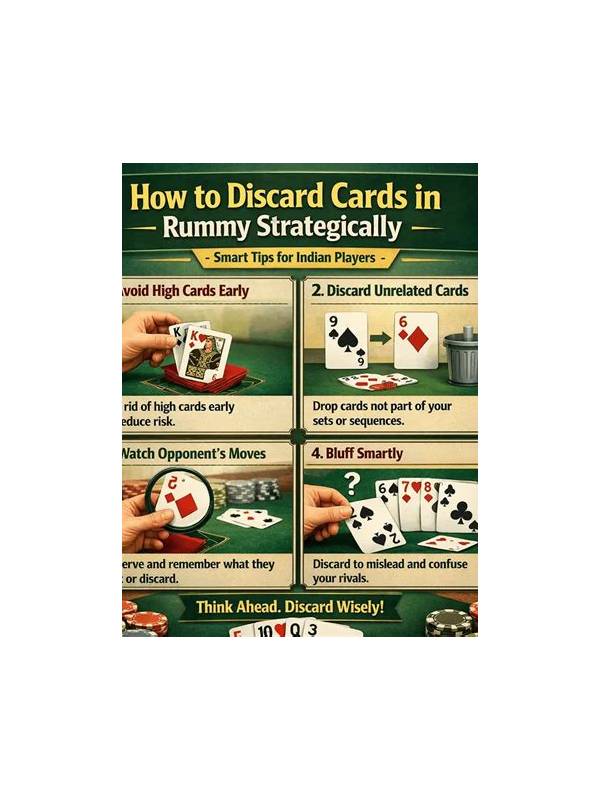
The discard pile contains useful information about the hand, yet it is easy to read too much into it. A discarded card may show that a player did not need it at one moment, but it does not reveal their complete plan. Treat the pile as evidence that updates your choices, not as a promise about future draws or hidden cards.
Start with direct information. Note which cards are visible, which ranks or suits appear repeatedly, and which useful cards have already left the available pool. This can help you estimate whether a route is becoming narrower. Avoid turning one discard into a confident story. A player may have released a card because it was redundant, because their hand changed, or because they had a different immediate priority.
Use the pile to compare your own routes. If a plan depends on several cards that have already appeared, lower its flexibility rating. If a different route remains broad, it may deserve more protection. This is a decision about your hand, not an attempt to identify another player’s exact holding. The distinction keeps the information useful without encouraging false certainty.
Be cautious with timing. A card discarded early may be less informative than a card released after several turns of development. Even then, timing provides context rather than proof. A late discard can reflect a completed structure, a failed plan, or a forced choice. Keep multiple explanations in mind and choose the action that remains sound across them.
When you are tempted to take a card because the pile seems to confirm a theory, pause and ask what your hand gains immediately. Does the card create a clean structure, or does it only fit a story about someone else? Prefer direct improvement over speculation. After the hand, record one inference that helped and one that was too confident.
Good information use is modest. The discard pile can narrow possibilities, expose replacement costs, and guide a route comparison. It cannot remove uncertainty. Keeping that boundary clear helps you make calmer decisions and prevents a visible card from becoming an excuse to abandon the structure of your own hand. It is also helpful to distinguish absence from evidence. A card not appearing in the visible pile does not mean it is available to you, and a card appearing once does not reveal where every copy is. Use the information to adjust a route modestly. The strongest decision usually remains the one that works even if your interpretation of another player’s hand is wrong.