Rummy Guide: Use Route Quality Instead of Route Quantity

A hand can appear promising because many cards seem to fit somewhere. That is route quantity: the number of imagined ways the hand might develop. Route quality asks a harder question: which of those ways has enough support to deserve space and attention? A small number of strong routes is usually easier to manage than a large number of fragile ones.
Evaluate a route on three dimensions. First is support. Are the needed neighbors or matching ranks still plausible, or is the route based on one perfect draw? Second is flexibility. If the next draw misses, can the cards serve another purpose? Third is cost. How many points, turns, or useful cards must be held while waiting?
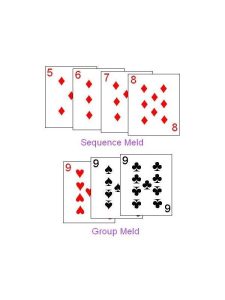
For example, a two-card sequence gap may look attractive because either of two cards could help. But if both cards are high value and neither has another role, the route may be expensive. A modest middle-card connection with a backup route can be higher quality even if it offers fewer theoretical completions.
Give each route a simple label: strong, workable, or speculative. Strong routes have current support and do not require breaking secure groups. Workable routes need one reasonable improvement but retain an alternative. Speculative routes are worth noticing but should not control the discard unless the position is already safe. Labels reduce the temptation to treat every possibility as equal.
Route quality can change after every draw. A new card may turn a speculative route into a workable one, or a visible discard may remove its only practical support. Update the label when the evidence changes. Do not update it merely because you have been waiting and want the route to succeed.
Near the end of a round, quality matters even more. There may not be enough time to support a beautiful but distant arrangement. Favor routes that can be checked, completed, or abandoned with a clear next action. After the round, record one route you overvalued and one you undervalued. This builds a personal sense of what realistic support looks like, which is more useful than memorizing a fixed ranking of cards.
When two routes have similar quality, prefer the one that is easier to explain. Clear explanations usually indicate that the supporting cards and next actions are visible. If a route requires a long story about what several unseen cards might do, keep it as a possibility but let a simpler route guide the next decision.