Rummy Card Group Labels for Clearer Silent Play

For practice, keep the labels private and consistent. They are a review aid, not a substitute for the table’s rules or for communication that the format requires.
Players often think of communication as chat or voice, but a clear internal labeling system can be just as useful. When a rummy table is quiet, busy, or unsuitable for conversation, neutral labels help you inspect the hand without confusing a temporary idea with a confirmed group.
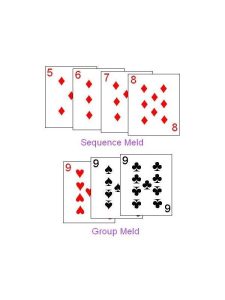
Start with three labels: fixed, possible, and loose. “Fixed” means a group is already legal under the format you are playing. “Possible” means the cards have a credible route to a legal group but still need one or more cards. “Loose” means a card currently has no convincing job. These labels describe the hand; they do not predict the result.
Apply the labels after sorting by suit and rank. Mark a completed sequence or set as fixed only after checking that no card is being used in another group. For a possible sequence, write down the missing ranks or the direction in which it can grow. For a possible set, record the missing ranks in the same rank across other suits. This prevents the mind from treating every pair as equally promising.
The labels are deliberately neutral. Avoid words such as “lucky,” “perfect,” or “hopeless,” because emotional labels can make a player defend a bad plan. A pair that looked promising two turns ago may become loose after several relevant cards are gone. Updating the label is not an admission of failure; it is a normal response to new information.
Use the system during a turn in a fixed order. Identify fixed groups, list possible groups, then choose a discard from the loose cards. If two loose cards remain, compare what each reveals and what each could still support. If there are no loose cards, examine which possible group is most dependent on one exact draw. This gives the turn a practical question instead of an impulse.
Labels also help after the hand. Record one moment when a possible group should have been downgraded and one moment when a loose card was kept without a reason. Over time, these notes reveal whether you tend to overvalue pairs, delay discarding high points, or abandon useful fixed groups. Silent play does not have to be vague: a few consistent labels can make every hand easier to explain and review.