Rummy Comparison: Closed-Deck and Open-Discard Choices
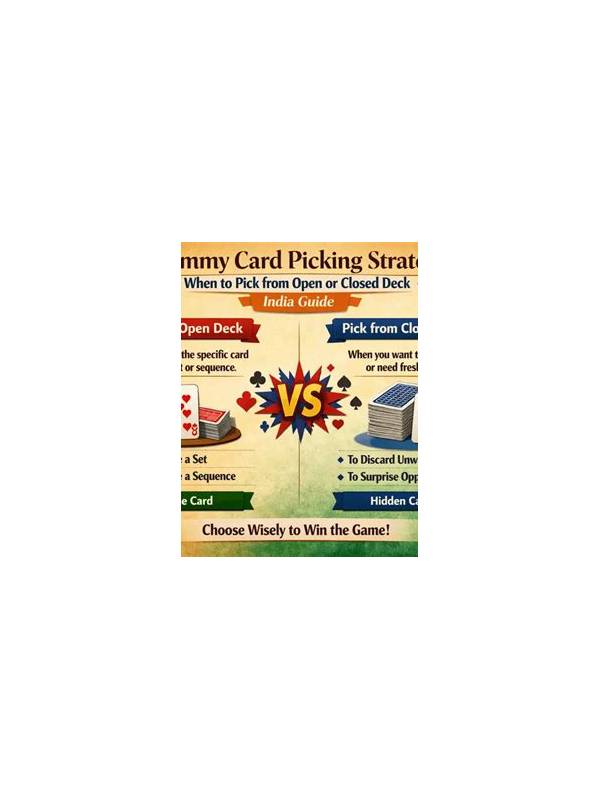
Choosing between the closed deck and the open discard is more than a question of which card looks attractive. The two sources offer different information and different effects on how much your opponents can infer. Comparing those effects helps you choose deliberately.
The open discard gives certainty. You know exactly which card you receive, so it is useful when that card completes a sequence or set immediately. It can also prevent an opponent from taking the card on the next turn. These are real advantages, particularly when your hand is close to a legal arrangement.
The cost is information. Taking a visible card tells the table that it has value to you. Observant opponents may infer a suit, rank, or possible sequence. That information is not always harmful; sometimes quick improvement matters more than concealment. But if the visible card only creates a vague possibility, revealing your direction may be an unnecessary price.
The closed deck preserves uncertainty but offers no guarantee. The top card may be irrelevant, and you may still need to discard without improving the hand. It is often appropriate when your hand has several reasonable routes and you prefer not to advertise one. It can also be a poor choice when you are carrying a costly card and need a specific improvement now.
Use a three-part test. First, does the open card complete or nearly complete a strong structure? Second, what does taking it reveal? Third, what is the penalty if the closed draw fails? The stronger the immediate improvement and the greater the cost of waiting, the more acceptable the visible choice becomes.
Remember that the discard pile can change as players act. A card that appears safe may become important after new information arrives. Do not make a permanent rule such as “always take known cards” or “always stay hidden.” The best source depends on the hand, the stage of play, and the urgency of reducing risk.
After each hand, review one choice from the comparison. Ask whether the information cost was justified by the progress, not whether the draw happened to succeed. This keeps the lesson focused on decision quality. Over time, you will become better at recognizing when certainty deserves priority and when preserving options is more valuable.
Rules about drawing and discarding can vary by format, so check the table instructions before relying on a general comparison. If a platform handles the pile differently, adapt the checklist to its actual sequence of actions. Clear knowledge of the rules is more useful than a memorized preference for either source.