Rummy Comparison: Fast Discard Versus Safe Discard
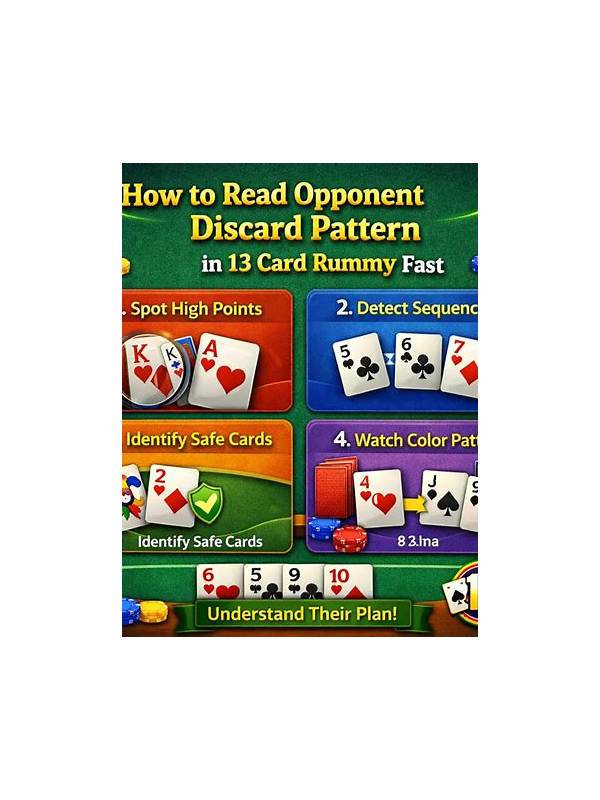
A fast discard removes an obvious weak card immediately. A safe discard may improve the hand more slowly while preserving options or reducing the chance of helping an opponent. Neither approach is always correct. The useful comparison is what each discard does to the next few turns.
Fast discards are attractive when a card has little connection, carries a high penalty, or blocks a required arrangement. Removing it can simplify the hand and make later decisions clearer. The danger is releasing a card that looked weak but was the only bridge between two useful groups.
Safe discards focus on the information visible at the table. You might avoid giving a card that appears to fit a route another player is collecting, or choose a card that leaves several alternatives in your own hand. The danger is becoming so cautious that you keep an expensive or isolated card for too long.
Compare the candidates with four questions: Which discard improves my structure now? Which one leaves the best fallback if the next draw misses? What information does each discard reveal? What is the cost of keeping each card for another turn? The answer can differ in a points game, a pool game, or another format with different penalties.
Do not assume that a safe discard is risk-free. Information at the table is incomplete, and avoiding one visible possibility may sacrifice a stronger personal route. Likewise, speed is not automatically reckless when your hand needs immediate cleanup.
Choose the discard that balances personal progress and table awareness. If two candidates are close, prefer the one that keeps your future plan easier to explain. A clear plan can be reassessed; a hand built from fear and exceptions is harder to manage. Reviewing this comparison after play will help you learn which type of mistake you make most often.
When the table is fast, reduce the comparison to one sentence for each candidate: “This improves my structure now,” or “This preserves two routes and avoids a visible danger.” If you cannot state the benefit, the candidate may be surviving only because you dislike releasing it. A short explanation keeps the decision grounded while leaving time to observe the next turn.
The balance can change during a hand. A discard that was safe early may become useful later, and a fast cleanup can become urgent when penalties rise. Reuse the comparison at meaningful turning points instead of applying one permanent style to every position. This keeps the method responsive to context.