Rummy Comparison: Flexible Cards Versus Certain Groups
Rummy decisions often present a trade-off between a flexible card and a group that is nearly complete. A connected middle card may support several sequences, while a pair may need only one matching rank to become a set. Neither is automatically better. The right choice depends on progress, draw availability, and the cost of waiting.
What flexibility provides
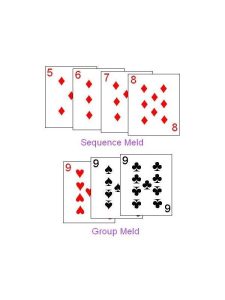
A flexible card can connect to more than one useful route. It may join a short run on either side, or it may combine with cards in different suits. This reduces the chance that a single blocked path will leave the hand stranded. Flexibility is especially valuable near the beginning, when little is known about the cards still available.
Flexibility also hides commitment. If you keep a card that fits several structures, you may delay showing a clear plan through your discards. That information value is real, but it should not become an excuse to keep every option indefinitely.
What certainty provides
A nearly complete group offers measurable progress. If a sequence is already valid, it can anchor the hand and reduce the number of cards that still need work. A pair that has several matching possibilities can also be attractive, but count those possibilities honestly. One missing rank may be scarce, and one visible copy in an opponent’s discard can change the estimate.
Certainty becomes more important as the hand advances. Waiting on a broad collection of possibilities may leave you with many ungrouped cards when a declaration window appears. A completed or nearly completed group gives the rest of the hand a clearer job.
A three-question comparison
Ask how many cards each choice needs to become useful, how many different arrivals support it, and what happens if no arrival appears soon. Then compare the penalty for abandoning the choice. A flexible card that can be discarded later at little cost is different from a high card that remains expensive if held too long.
Use a simple label: “options,” “progress,” or “risk.” Label each candidate before acting. If one card gives options while another gives progress, choose according to the phase of the hand. If one gives options but creates high risk, the comparison may already be settled.
The goal is not to eliminate uncertainty. It is to make the trade-off visible. Skilled play still includes judgment, but a clear comparison helps prevent a flexible card from receiving permanent protection merely because it looks versatile.