
Rummy Comparison: Open Information Versus Hidden Assumptions
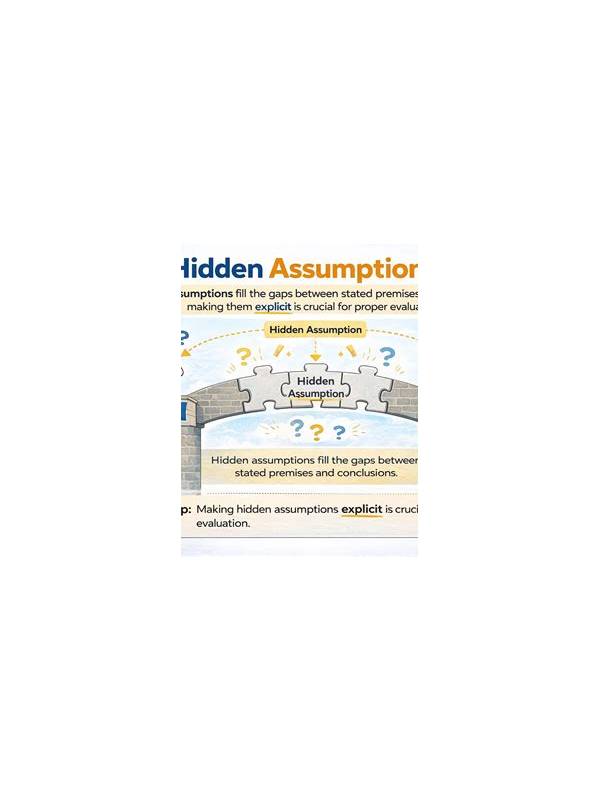
Rummy decisions often contain two kinds of information. Open information includes your hand, visible discards, the rules, and any cards that have been exposed. Hidden assumptions include what another player might need, which card may appear next, or how quickly a route will improve. Both can influence a plan, but they should not carry equal confidence.
Begin by separating facts from guesses. Write “a matching rank has appeared in the discard pile” as a fact. Write “the opponent probably does not need this suit” as a guess. This small distinction prevents a plausible story from quietly becoming a certainty. It also makes later reviews more useful because you can see which assumptions were supported and which were merely convenient.
Use open information to establish the baseline. Check the shape of your own hand first: complete groups, developing groups, isolated cards, and point exposure. Then review visible discards for evidence about routes that may be less available. Do not treat a missing card as proof that it is held by another player. It may still be in an unseen part of the deck or may simply not have appeared yet.
Only then add hidden assumptions as conditional considerations. Instead of saying, “They must want this card,” say, “If they are collecting this suit, the discard could help them.” Compare that possibility with your own need for the card. If keeping a card weakens your hand substantially just to avoid a speculative benefit, the assumption may be too expensive to follow.
Confidence labels help. Mark a conclusion as high confidence when it follows directly from visible cards and rules, medium confidence when it depends on a pattern, and low confidence when it is mostly a prediction. Your next move should be driven mainly by the high-confidence facts, with medium-confidence evidence used as a tie-breaker. Low-confidence guesses should rarely justify a major sacrifice.
After the hand, review the assumptions separately from the decisions. A correct prediction does not automatically make a decision good, and an incorrect prediction does not automatically make it foolish. Ask whether the choice was reasonable under the confidence level you had. This approach keeps observation, probability, and imagination in their proper places, producing calmer and more adaptable play.
Keep the language modest when you discuss a hand afterward. “This discard might have helped” is more accurate than “this discard definitely caused the loss.” Careful wording makes it easier to learn from uncertainty without inventing certainty that the cards never provided.


