Rummy FAQ: How Long Should You Keep a Developing Route?
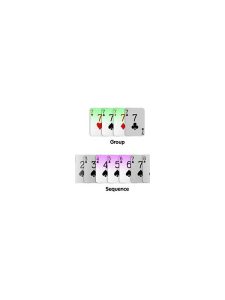
There is no universal number of turns for keeping a developing rummy route. A route is a set of cards that could become a legal group but is not ready yet. Its holding period should depend on how many useful completions remain, how much space it occupies, and what you give up by keeping it.
Begin by counting demand. If one card completes the route, the wait is narrow but the payoff may be clear. If several cards can complete it, the route has broader support. Neither situation is automatically better. A single missing card may be nearly impossible to find, while a multi-card route may compete with several other plans. Describe the demand accurately instead of calling every route flexible.
Then measure opportunity cost. Ask what other cards could be grouped if you released one member of the route. A developing route that uses two cards and blocks no strong alternative can be held calmly. A route that occupies half the hand while leaving high-value cards exposed deserves a quicker review. The question is not only what the route might become, but what it prevents now.
Set a review trigger before emotion takes over. Triggers can include drawing a card that supports a different pure sequence, seeing several needed cards disappear from the discard pile, or reaching a point where the hand needs more immediate structure. When a trigger occurs, compare the route again rather than protecting it because you have already invested turns.
Visible information also matters. A discard pile may show that some ranks are being released, but you cannot assume every unseen card is still available. Use the pile to update your estimate, not to create certainty. If an opponent repeatedly takes a particular kind of card, treat that as a reason to review your own route and your discard choices.
In practice, keep a developing route while it has a plausible completion, acceptable cost, and no clearly superior replacement. Release it when one of those conditions disappears. This approach avoids two common errors: abandoning every incomplete idea too quickly and keeping a weak idea simply because it was the first plan you formed. A route is a working hypothesis, not a promise.