Rummy FAQ: When Is a Pair More Useful Than a Sequence Idea?

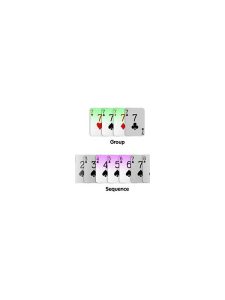
A pair feels concrete because two cards already share a rank, while a sequence idea may consist of two cards separated by one missing neighbor. That visual difference can make a pair seem automatically better. In practice, the better choice depends on completion routes, point value, and what the rest of the hand needs.
First, ask what the pair can become. If a third card of the same rank is plausible, it may form a set. If you hold two pairs, one can sometimes provide a useful foundation while the other is released. But a pair of high cards can still be expensive when the matching card does not appear. Its apparent strength should not hide its penalty.
Now inspect the sequence idea. A connected same-suit pair can accept cards on one or both sides, particularly in the middle of the suit. It may therefore have more useful draws than the pair. A sequence also may be necessary for a valid declaration under the format. Rules that require a pure sequence should heavily influence the comparison.
Consider overlap. A card may appear valuable in both structures, but you cannot count it twice. Choose the arrangement that leaves the fewest awkward leftovers. If keeping the pair forces you to abandon an almost complete run, the pair may be less useful than it first appeared. If the sequence needs one exact card while the pair can use several ranks, the balance may reverse.
Recent discards provide context but not certainty. Visible cards can make one route more or less likely. Use them to break ties, and keep your own hand’s risk first. Do not hold a weak pair simply because an opponent might need the card you would release; a strong personal improvement is usually more important.
The answer is not “always keep sequences” or “always keep pairs.” Compare how many realistic cards improve each plan, how quickly each plan can finish, and what happens if neither receives help. A pair is useful when it supports a clear route; a sequence idea is useful when it preserves practical connections. Make the choice from the whole hand, not from the shape of two cards.
When the comparison remains close, choose the plan that is easier to explain and abandon. This limits future confusion. Revisit the choice after the next card instead of treating it as a permanent commitment.
Remember that a pair can change value quickly when a matching rank appears, while a sequence can change value when a neighbor arrives. Reassess after meaningful evidence rather than defending the original choice. Flexibility is the ability to update, not the promise that both plans will remain equally strong.