Rummy Guide: Read a Hand From Anchors Outward
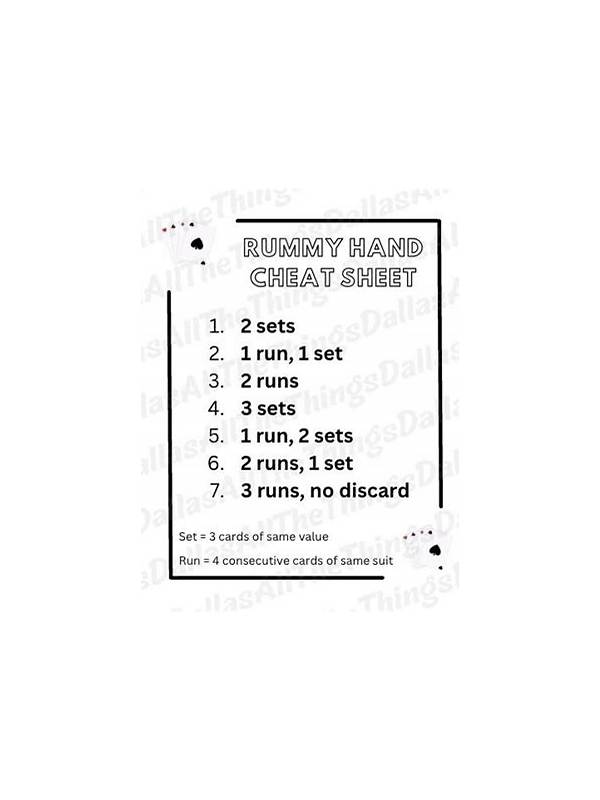
When a hand contains many connected cards, starting with the most exciting pair can create confusion. Reading from the outside in offers a calmer sequence. First identify what is fixed, then examine the spaces around it, and finally evaluate the cards that have not earned a role.
Begin with confirmed natural sequences and complete sets. These are the anchors of the hand. Record them mentally without rearranging them for the moment. Next inspect cards immediately adjacent to each anchor. A nearby card may extend a sequence, complete a second structure, or connect two possible arrangements. Because anchors are already known, this step is less likely to double-count a card.
After the edges of the structures are understood, examine the middle. Middle cards can have many connections, but their flexibility can be misleading. Ask whether each card supports a real alternative or merely several theoretical ones. If two imagined routes use the same card, note the conflict instead of counting both as progress.
The final group consists of unassigned cards. These deserve a strict test: can they join a structure through several realistic draws, or are they being kept because they are attractive? Unassigned high-point cards deserve particular attention, but a low-point card that blocks a useful rearrangement may also be ready to leave.
Outside-in reading helps with discard decisions because it protects anchors from accidental destruction while exposing the weakest attachments. It also creates a natural review order. If a hand fails, ask whether the anchor was misread, whether an edge card was overprotected, or whether an unassigned card occupied space for too long.
Practice with a physical or digital replay. Pause before each draw and describe the hand in three layers: anchors, attachments, and unassigned cards. Keep the description factual and short. With repetition, the method reduces the urge to solve the entire hand at once. It does not guarantee a winning declaration; it gives each card a fair evaluation based on its current role.
The order also helps when the screen is busy or the turn clock is short. Anchors provide a starting point, attachments provide likely candidates, and unassigned cards provide the review queue. That structure reduces random rearranging and leaves more attention for legality and timing.
If an anchor later proves invalid under the table rules, remove it from the first layer immediately. The method depends on accurate foundations. Rechecking the rules before declaring is part of reading the hand from the outside in, because a beautiful arrangement is not useful if it cannot legally be submitted.