Rummy How-To: Build a Two-Route Completion Map

A completion map is a compact way to display what your hand is trying to become. Building two routes does not mean keeping every possibility forever. It means comparing two realistic arrangements before you commit valuable cards to one narrow idea. The method is useful early in a hand, when uncertainty is high and flexibility matters most.
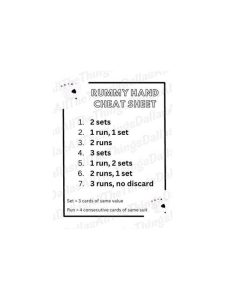
Use plain language in the map. “Needs a nearby card” is often more useful than writing a complicated probability estimate that you cannot verify. If you play with different rule variations, note any special requirements before comparing routes. A map should reflect the actual rules of the table, including the number of groups needed and any declaration conditions. Clear constraints prevent a visually attractive arrangement from being mistaken for a legal finish.
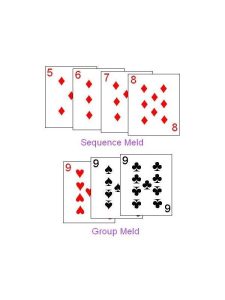
Start by sorting the cards into groups that are already complete, groups that need one nearby card, and cards with no current connection. Leave completed groups visually separate. For the remaining cards, sketch two arrangements using simple labels such as Route A and Route B. Route A might use a connected sequence, while Route B might combine a pair with a different sequence or set.
For each route, write the missing card types rather than a long list of exact outcomes. Then count how many cards can help and how many cards must be preserved to keep the route alive. A route that needs one exact card and forces several awkward discards is narrow. A route with several useful improvements but a slightly higher final cost may be more resilient.
Next, identify the shared cards. A shared card belongs to both routes, so discarding it may destroy more flexibility than the hand first suggests. Mark these anchors clearly. Also mark the cards that belong only to one route. Those are the natural candidates for a future decision when a draw makes one plan stronger than the other.
Set a decision point before you begin waiting. It might be after one miss, after two turns, or when a visible discard changes the available information. At that point, choose the route with the better current evidence. Keeping both routes beyond the decision point can become indecision disguised as flexibility.
Finally, compare the map with the discard you actually made. Did you remove a route too soon? Did you keep a shared card that had little chance of completing either plan? The map is not meant to predict the deck. It is a clear record of what you were protecting and why. With practice, this makes complex hands easier to explain and easier to adjust.