Rummy How-To: Make a Three-Column Hand Review
A quick three-column review can turn a crowded rummy hand into a manageable list. The columns are completed groups, active possibilities, and decision cards. The purpose is not to create a perfect permanent arrangement. It is to show what is already doing useful work, what still deserves a chance, and what needs a prompt decision.
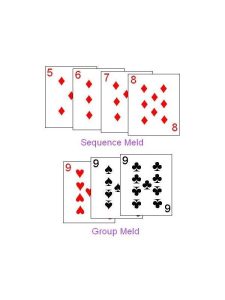
Place confirmed legal groups in the first column. Do not include a group merely because its cards look close. A completed column gives you an anchor and prevents you from repeatedly rebuilding something that is already sound. If the rules require a particular type of sequence or set, verify that requirement before treating the group as finished.
Use the second column for incomplete groups with credible routes. Write the missing cards or possible extensions beside each group. Limit the list. If every card is described as a possibility, the review has not helped. An active possibility should have a reason to remain, such as multiple connectors, low penalty, or overlap with another route.
Place isolated, expensive, duplicated, or awkward cards in the third column. A decision card is not automatically a discard. It is simply a card that needs comparison. Ask whether it can join an active possibility, improve a completed group under the rules, or serve as a useful flexible card. If none of those tests succeeds, it becomes a leading discard candidate.
After drawing, update only the affected columns. Move a card into a completed group when legality is clear. Move a possibility to the decision column when its routes shrink. Move a decision card into an active group only when the new connection is credible. Small updates are faster and more accurate than starting from zero.
Before discarding, compare the top two decision candidates. Consider points, information given away, future flexibility, and whether the choice preserves a legal path. This method works on a physical table or a small screen because it relies on labels rather than elaborate notation. With practice, the three columns become a short mental routine.
The review can help after a mistake. If a card was placed in the active column even though its route was unclear, mark that as the point where the hand became crowded. If a decision card was ignored because it had a familiar rank, note that bias. The purpose is not to prove that every turn was predictable; it is to show where attention could have been clearer.
Keep the physical or mental layout stable from turn to turn. Consistency reduces the time spent deciding how to organize information. Once the layout feels automatic, more attention is available for table clues, legality, and the comparison between the two best discards.