Rummy How-To: Read the First Discard Without Overreacting
The first discard in an online rummy round can attract too much attention. A player may see a high card, a middle connector, or a card from a suit they appear to avoid and immediately form a story. A better approach is to treat the discard as one piece of evidence and keep your own hand as the main source of decisions.
First, identify the broad category of the card. A high card may have been released to reduce penalty risk. A middle card may have been discarded because it did not fit the player’s existing groups. A card that seems useful to you may be useless to someone holding different neighbours. Avoid translating one discard into a confident claim about their complete plan.
Second, compare the discard with your needs. If it completes a pure sequence or creates a strong route, consider it on its own merits. Do not take it merely because you think the other player does not want it. The visible discard has value when it improves your hand while keeping your next discard manageable.
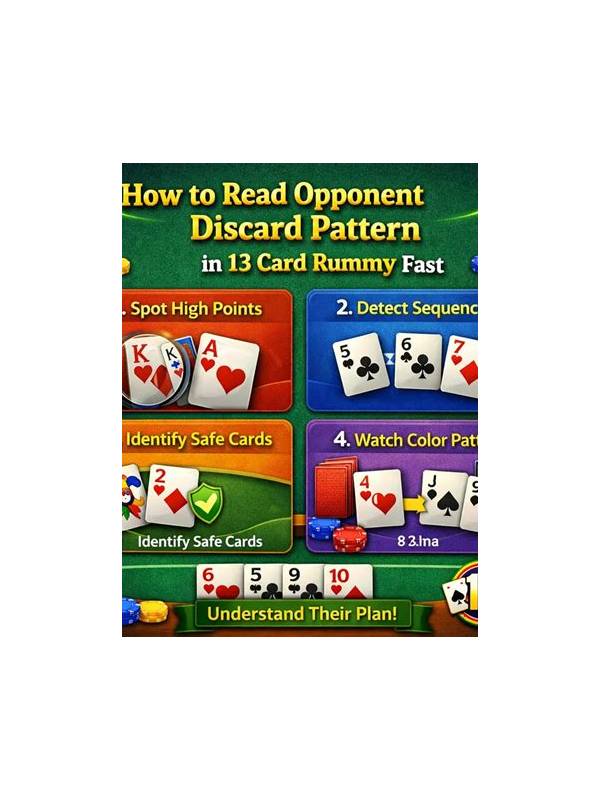
Third, observe repetition. A single card says little. Several cards from the same suit, rank range, or family may reveal a preference, but even a pattern can be misleading when the player is simply clearing awkward cards. Use repeated observations to adjust your choices slightly rather than abandoning your plan.
It also helps to record your first impression and revisit it later. After the round, ask whether the discard actually predicted anything. This separates useful pattern recognition from hindsight. If your interpretation was wrong, that is not a failure; it is information about how much weight you should give similar clues in future hands.
The practical rule is to observe, compare, and wait for confirmation. The first discard can help you decide which visible cards deserve attention, but it should not force a dramatic change in your hand. Calm observation preserves flexibility and prevents another player’s ordinary discard from becoming the centre of your strategy.
You can make the observation more useful by noting the position of the card in the round. An early discard may reflect an ordinary opening sort, while a later discard may reflect protection of a nearly complete plan. Even then, timing is supporting evidence rather than proof. Look for whether the player changes direction over several turns, while keeping your own hand and its penalty exposure as the main reference.