Rummy Practice: Replay One Decision With Three Alternatives
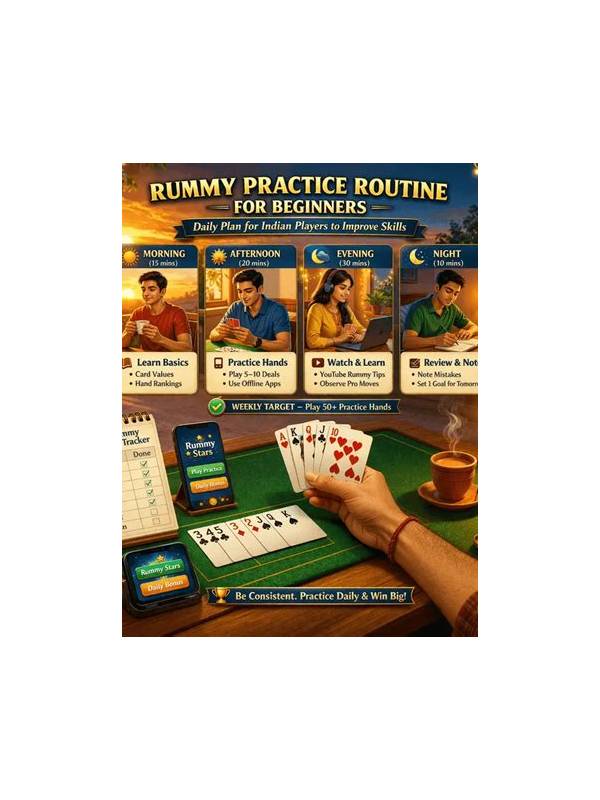
Practice does not always require another full game. A targeted replay can teach more when it focuses on one important turn and compares realistic alternatives. The three-alternative exercise is short enough to repeat and detailed enough to reveal habits.
Choose a turn where the hand changed direction: a required group was broken, a visible discard was taken, or a new card created two competing routes. Record the cards and information that were visible at that moment. Do not use later cards in the initial analysis.
Describe the decision you actually made in one sentence. For example, “I kept the pair and released the middle connector.” Then create three alternatives: preserve the current layout, pursue the strongest visible route, and redesign around the most flexible card. Each alternative should be legal and plausible with the information available. Do not include a magical option that depends on knowing the next draw.
For each alternative, score four qualities from one to three: protection of required structures, number of realistic helpful draws, point exposure, and ease of reassessment. The scores are not a mathematical prediction. They force the review to include more than the final result.
After scoring, check whether your original decision received an unfair penalty because it lost. Ask what information would have made it better or worse. If the decision was reasonable but unlucky, label it as a sound risk. If it relied on an unclear hope, label it as a plan that needs a rule.
Turn the lesson into one experiment. Perhaps you will require two plausible outs before keeping a narrow route, or you will protect a pure sequence until a second structure is available. Test one rule across several hands and record exceptions. A rule that helps in one position may be harmful when the hand is already secure.
Keep the replay brief. The goal is to improve one decision pattern, not to construct a perfect explanation of an entire game. Repeated small reviews build a library of situations you can recognize in real time, making future choices calmer and more evidence-based.
Use the same scoring scale every time so comparisons remain meaningful. Independent review can also expose an assumption that felt obvious only because the final card made the chosen line look inevitable.
If the exercise takes longer than the hand itself, reduce it to two alternatives and one question: which choice kept the most credible finish? Practice should sharpen attention, not become another source of fatigue or pressure.