How to Use a Rummy Hand Checklist Without Playing Mechanically
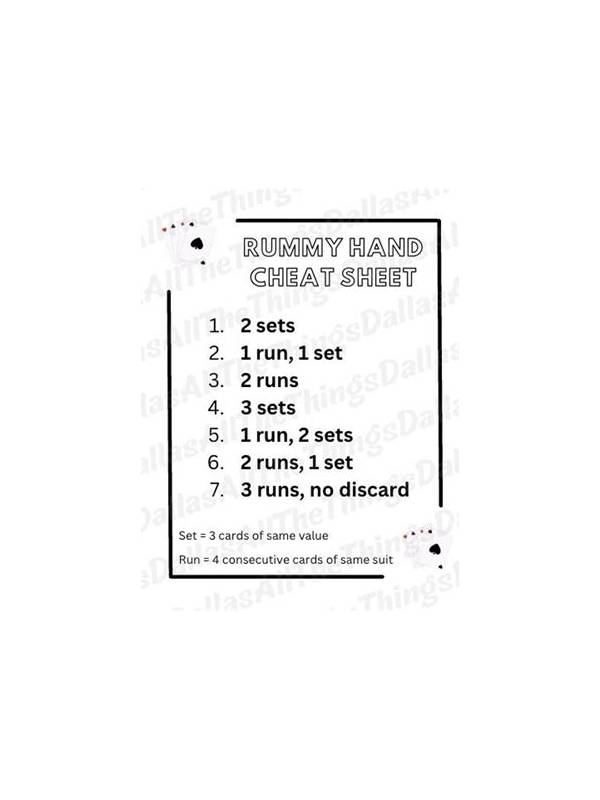
A checklist should reduce missed details, not replace thinking. In rummy, a compact sequence of questions can help you inspect a hand consistently while allowing the answer to change with the draw, variant, and table context.
Use four questions. First: what groups are already complete or nearly complete? Second: which cards are isolated or expensive? Third: what does the available draw improve, and what does it reveal? Fourth: what discard leaves the hand safest and most flexible? These questions cover structure, risk, information, and the consequence of your action.
Run the checklist in order, but keep each answer short. “One pure run, one weak pair, two high cards” is enough for the first question. A long internal speech can create its own delay. The checklist is a scan that points to the important comparison; it is not a demand to explain every card.
Add a variant-specific check before play. Some formats require a particular type of sequence, use different scoring, or define a declaration differently. Write that requirement at the top of your notes or review the in-app rules. General habits cannot substitute for the rules of the table you actually joined.
Avoid mechanical discarding. The highest card is not always the first card to remove, and the newest card is not automatically the least useful. Use the checklist to identify candidates, then compare how each candidate affects future connections. If the discard pile contains useful information, include that evidence rather than following a fixed priority.
A checklist is most useful when attention is low. It can also help new players build a stable routine before they develop faster pattern recognition. As you improve, shorten the wording rather than abandoning the structure. Experienced players still benefit from a quick confirmation on unusual turns.
Review the checklist after several sessions. Remove questions that never change a decision and add one for a recurring error. The finished version should fit in a few lines and remain easy to use under normal time pressure. Consistency provides the benefit; flexibility keeps the routine connected to the actual hand.
You can keep the checklist on a small card beside the device, but do not include account details or payment information on it. A neutral reminder such as “structure, risk, information, discard” is enough. Once the sequence becomes familiar, the reminder can serve as a prompt for attention rather than a script that dictates the result.