Rummy Tips: Recognize a False Pair Early
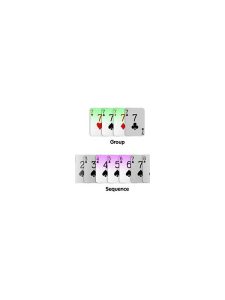
Pairs are easy to notice in a rummy hand. Two cards of the same rank suggest a set, while two neighboring cards suggest a sequence. The danger is treating every pair as equally valuable. A false pair is a relationship that looks promising but has little practical support from the rest of the hand or from the cards still available.
Test a same-rank pair by asking how many cards could complete it and whether the result would fit the table’s rules. If the pair needs one exact card, it is narrow. If the same pair also blocks a better pure-sequence route, it may be expensive to keep. A pair can remain temporarily, but label it as a possibility rather than a confirmed combination.
For neighboring cards, check the suit and the available direction. A six and seven of one suit may connect to a five or eight, but not every theoretical extension is equally useful. If you are already holding many cards that need unrelated ranks, waiting for both sides can create a crowded hand. Prefer connections that can be completed from more than one direction when other factors are similar.
Look for support from a third card. A pair supported by a nearby card, a second same-rank card, or a flexible rule-based option has a clearer path than a pair standing alone. Support is not a guarantee. It simply gives you a reason to keep the cards for the next few turns. Without support, set a review point and be willing to release the pair.
A practical exercise is to write three labels beside every apparent pair during a practice hand: confirmed, developing, or speculative. Confirmed means it already belongs to a legal group. Developing means one or more realistic cards could complete it. Speculative means the relationship is attractive but narrow, unsupported, or competing with a stronger route. Recheck the labels after each draw.
The purpose is not to discard every uncertain pair immediately. Good hands often begin with incomplete ideas. The purpose is to avoid giving an uncertain pair the same protection as a finished sequence. When a new card arrives, promote a pair only when the evidence improves. If it stays speculative while another route becomes clearer, let it go without treating that choice as a failure.