Rummy Comparison: Ranked Cards Versus Connected Cards
A common rummy mistake is ranking cards only by face value. High cards may carry more penalty in some scoring systems, so they can feel urgent to discard. Yet a high card that completes a sequence may be more useful than a low card that has no connection. Comparing ranked cards with connected cards helps make that distinction visible.
Start with penalty exposure. Identify cards that would be costly if the hand ended before they joined a legal group. This creates a safety list, but it does not automatically decide the discard. A high card in a confirmed sequence is protected by structure. A low card held alone may be less costly but still consumes a place and contributes nothing to the hand.
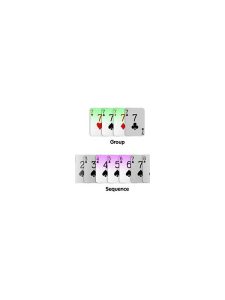
Next, compare connection breadth. A connected card can usually join a sequence in one or more directions, while a same-rank card may support a set. Count realistic links rather than theoretical ones. A card with two sensible uses is more adaptable than a card with one narrow use, even when the narrow card has a lower rank.
Consider the role of the card in the whole layout. A card can be an anchor, a bridge, or an orphan. An anchor belongs to a nearly complete group. A bridge connects two useful possibilities. An orphan has no current relationship. Usually, anchors deserve protection, bridges need a time-limited review, and orphans are the first discard candidates. This role-based comparison is more reliable than sorting from ace to king.
There is also an information cost. A connected card may reveal a plan if discarded, especially when neighboring cards are visible. A high isolated card may be safer to release if it does not help an opponent’s apparent route. You cannot calculate this perfectly, but you can avoid discarding automatically based on rank.
Use the comparison in a quick table during practice: card, penalty, useful links, current role, and discard risk. After each turn, update only the changed entries. The exercise teaches you to see card value as a moving combination of structure, flexibility, and exposure. In a real game, the final choice should still follow the specific rules and scoring of the table, but this method keeps one number from dominating the decision.