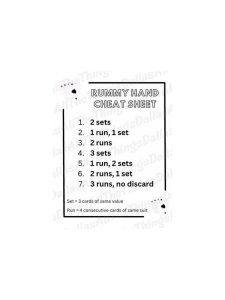
Rummy Comparison: Short Melds Versus Long Melds
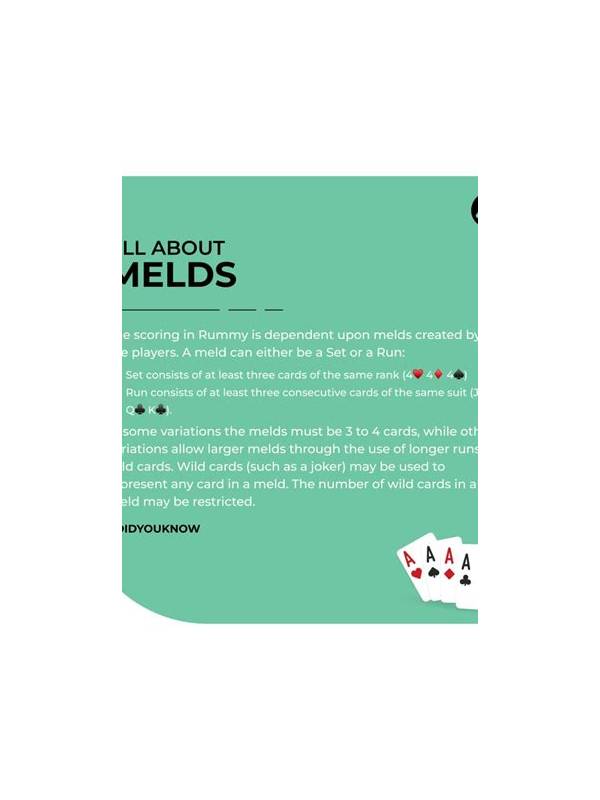
Short melds and long melds solve different problems in rummy. A short meld is often easier to complete and can reduce uncertainty quickly. A long meld may organize more cards at once, but it usually needs more precise evidence. Choosing between them requires more than counting how many cards each route could eventually use.
Short melds are attractive when the hand is unsettled. A small set or compact sequence can give you a reliable foundation while leaving other cards free to develop. It may also be easier to abandon if the needed card does not arrive. This flexibility is valuable early, when the table has not revealed much information.
Long melds can be efficient when several cards already align. If a long sequence needs only one missing connector, it may be better than splitting those cards into separate short plans. The danger is assuming that length itself equals strength. A long group with several missing cards can consume turns and encourage you to ignore better opportunities.
Compare the routes on three measures. First is completion speed: how many useful draws are required? Second is replacement difficulty: if the route fails, how hard will it be to repurpose the cards? Third is exposure: how much does pursuing the route reveal about what you need? A short meld often scores well on the first two measures, while a long meld may score well only when it is nearly complete.
The stage of the hand changes the answer. Early on, favor routes that preserve choices. In the middle, favor a route with strong evidence and a manageable backup. Near the end, a short, certain meld can be more valuable than an elegant long plan that still depends on one narrow draw. Rules about declarations and required melds also matter, so apply the comparison to the format you are playing.
Do not compare only the cards inside each group. Include the cards you would need to discard while waiting. A route that looks efficient may force several valuable cards out of your hand. A slightly shorter route can be better if it allows safer discards and keeps an alternative alive. The strongest plan is the one that improves your whole hand, not simply the one that contains the most connected cards.
When practicing, compare the same starting hand under both approaches. Note how many turns each route needs, how many cards remain awkward, and how easy it is to change direction. This exercise makes the tradeoff concrete and prevents a slogan such as “always build long melds” from replacing judgment.