Rummy Tips: Protect Information When Choosing a Discard
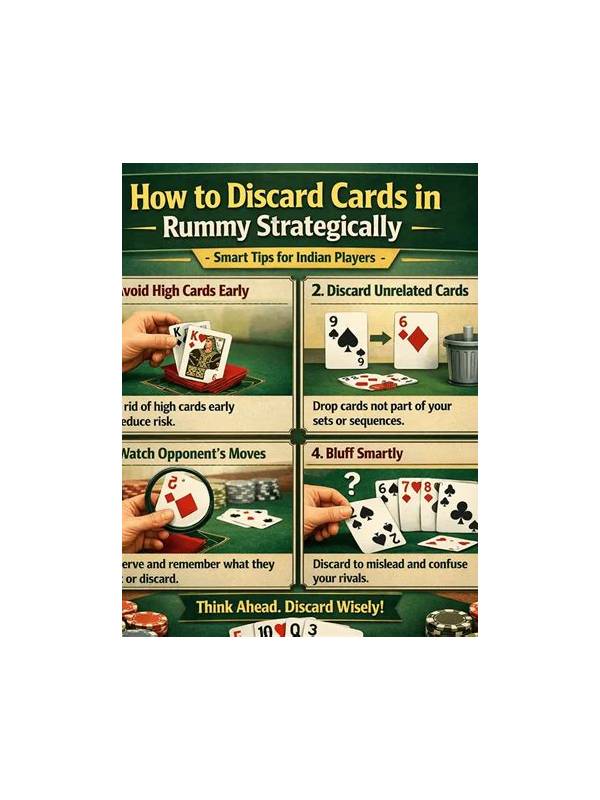
Every discard changes your hand, but it can also reveal information. A card that clearly belongs to one of your active routes may tell observant players what you are no longer pursuing. You cannot hide every signal, yet you can avoid giving away unnecessary information when two discards have similar value.
First, protect the hand’s real priorities. Information concerns should never make you keep a card that damages your legal structure or carries a high replacement cost. Choose a sound hand before choosing a subtle signal. Once the structural options are close, information cost becomes a useful tie-breaker.
Compare candidate discards by asking what each one communicates. Releasing a disconnected card may say little. Releasing the only card from a suit or rank pattern may make a previous route easier to infer. The signal is not certain because other players have limited information, but obvious patterns can still affect how they interpret later discards.
Avoid overestimating your ability to control the table’s interpretation. An opponent may draw from another source, hold a duplicate, or simply miss the signal. Treat information as a small consideration, not a precise form of control. Your primary objective remains building a valid hand efficiently.
Information protection is most useful when paired with consistent decision rules. If your discards follow a clear value and flexibility method, you are less likely to make a strange move merely to appear unpredictable. A random-looking discard that weakens your route is usually more costly than the information it conceals.
Review the decision after the hand. Did the selected discard preserve your strongest route? Did the alternative really reveal more, or did you imagine a level of certainty that was not available? These questions keep information awareness practical rather than superstitious.
In short, choose structure first and information second. When two cards are genuinely close, prefer the discard that does its job while exposing the least unnecessary detail. That balance protects both your hand and your decision quality.
Remember that public tables are not a place to share private details. If another player asks for your login, payment information, verification code, or a screenshot containing account data, refuse and use the platform’s reporting tools if needed. Strategic information and personal security are separate concerns, and account protection always comes first.
Good security habits are part of good table discipline.
They protect the account beyond the current hand.