Rummy FAQ: Can Two Complete Groups Still Hide a Problem?

Two complete groups can make a rummy hand look nearly finished, yet a problem may remain. The missing issue is often not the groups themselves but the requirement that connects the whole hand. Before treating two groups as proof of strength, check the rules, the unresolved cards, and the route to a valid declaration.
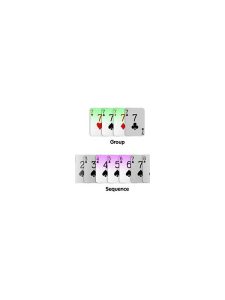
Start by naming the groups accurately. A row that looks like a sequence may contain mixed suits, while matching ranks may not be arranged according to the table’s group rules. Confirm that each group is legal rather than relying on its appearance. If a joker is involved, verify how the table allows it to substitute and whether a pure group is still required separately.
Next inspect the cards outside the complete groups. These cards still determine whether the hand can finish. Separate them into developing combinations, isolated cards, and cards that carry unusual penalty or risk. Two secure groups are helpful, but four unrelated remaining cards may be a larger problem than one complete group and a strong developing sequence.
Check the declaration requirement before improving the easy part of the hand. Some formats require a pure sequence, a minimum number of groups, or a specific arrangement. A player can spend several turns polishing a set while the essential sequence remains impossible. Mark the requirement in your mind and give it priority whenever the rest of the hand is already stable.
Then compare the remaining routes by demand. Count the ranks or cards that could complete each route and note whether they are interchangeable. A route that needs one exact card may be weaker than a less attractive route with several completions. Do not assume the discard pile proves that a needed card is still available; use visible information cautiously.
Finally run a declaration check before acting on confidence. Read every group, count every card, and confirm the table’s current rules and button labels. If the hand is not ready, keep the complete groups protected while working on the unresolved requirement. Complete groups are a foundation, not a guarantee. Their value is highest when they reduce uncertainty without making you forget the part of the hand that is still unfinished.