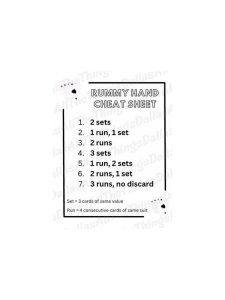
Rummy How-To: Make a Two-Minute Variant Summary
Different rummy tables can use different terms, limits, and declaration requirements. Relying on memory is risky when a format is unfamiliar. A two-minute variant summary provides a quick reference before play and reduces the chance of applying a familiar rule to the wrong game.
Create the summary from the platform’s official rules or the table information shown before joining. Start with the objective: what must be arranged to declare successfully? Note the number of cards, the number of players if relevant, and whether the game uses one or more decks. These details affect how you interpret visible cards.
Add the group rules next. Write the minimum length for a sequence and set, how printed or wild jokers work, and whether a pure sequence is compulsory. Use the exact language from the rules when possible. If a term is unclear, mark it for later checking rather than guessing.
Record the turn sequence in one line: draw source, arrangement, discard, and declaration timing. Include what happens when the timer expires or a connection fails if the platform documents it. This is useful because many mistakes occur during transitions, not while identifying a group.
Keep scoring separate from structure. Write how points are calculated, the maximum penalty if one is stated, and whether the table is points, pool, deals, or another format. A player can make a legal hand and still misunderstand the consequence of a result, so do not combine these notes into a vague sentence.
Finish with three personal reminders, such as “check the compulsory group,” “read the discard rule,” and “confirm the timer.” Keep the page short enough to scan in seconds. Do not include promotional claims or unverified advice in a rules summary.
Review the summary whenever the app changes a format or you move to a new table. A quick reference is not a substitute for the full rules, but it creates a reliable pause before play. When practice ends, update only the points that caused uncertainty; a living summary becomes more useful with each verified correction.
Store the summary where it can be read without opening an unfamiliar link during a live turn. If a rule conflicts with your memory, stop and consult the full official explanation. The summary is a prompt for careful checking, not permission to fill gaps with assumptions.