Rummy Tips: Use the Discard Pile as a History, Not a Promise
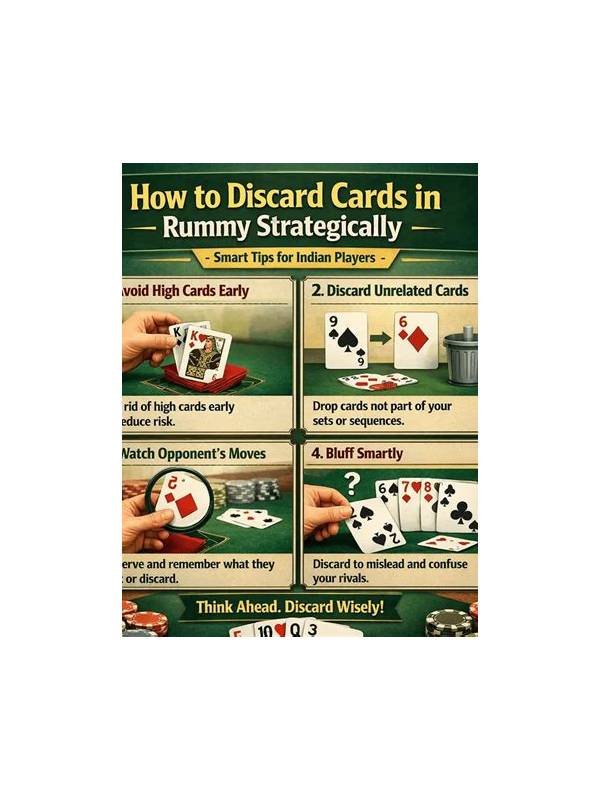
The discard pile is useful because it preserves a partial history of the hand. It can show which ranks, suits, or connectors have already been released. The mistake is treating that history as a promise. A card you need may still be available, but there is no guarantee that it will arrive before your route becomes too expensive.
Read the pile in layers. First, check direct availability: cards that would complete your strongest route. Second, check neighbor patterns: several nearby cards may support a sequence even if the exact connector is absent. Third, observe timing. A card that was discarded early may have meant something different from a card released after several turns of development.
Avoid over-reading another player’s choice. Taking a card can reveal interest, but leaving a card does not prove disinterest. A player may be protecting a route, avoiding information, or simply choosing among several weak options. Use the action as one piece of evidence and keep alternative explanations available.
Before taking from the pile, ask what information your action gives away and whether the card improves enough routes to justify that cost. Drawing a visible card for one narrow hope can make your plan easier to read while giving little flexibility. Sometimes a less obvious stock draw is better; sometimes the visible card is clearly the efficient choice. Compare, do not follow a fixed rule.
Finally, remember that the pile changes every turn. Re-scan it after a meaningful discard instead of relying on your first impression. The discard history can prevent you from chasing an exhausted route, but it cannot tell you the future. Let it narrow possibilities while preserving room for uncertainty.
One useful exercise is to cover the newest few discards and make a prediction about what information you would lose. Then uncover them and compare your assumption with the actual record. This trains memory without encouraging certainty. You may also group the pile by rank or suit during post-game review to see which routes became crowded. During a live hand, keep the scan brief and avoid slowing the table. The goal is not to memorize every card; it is to notice when the visible history makes a previously attractive route less reasonable.